Dental implants replace missing teeth with a stable, long-lasting solution. If you’re wondering how does tooth implant work, this short guide will walk you through the process in clear steps. Expect a plain explanation of parts, surgery, healing, risks, and the tech used — about 500 words to help you understand what to expect.
What Is a Tooth Implant?
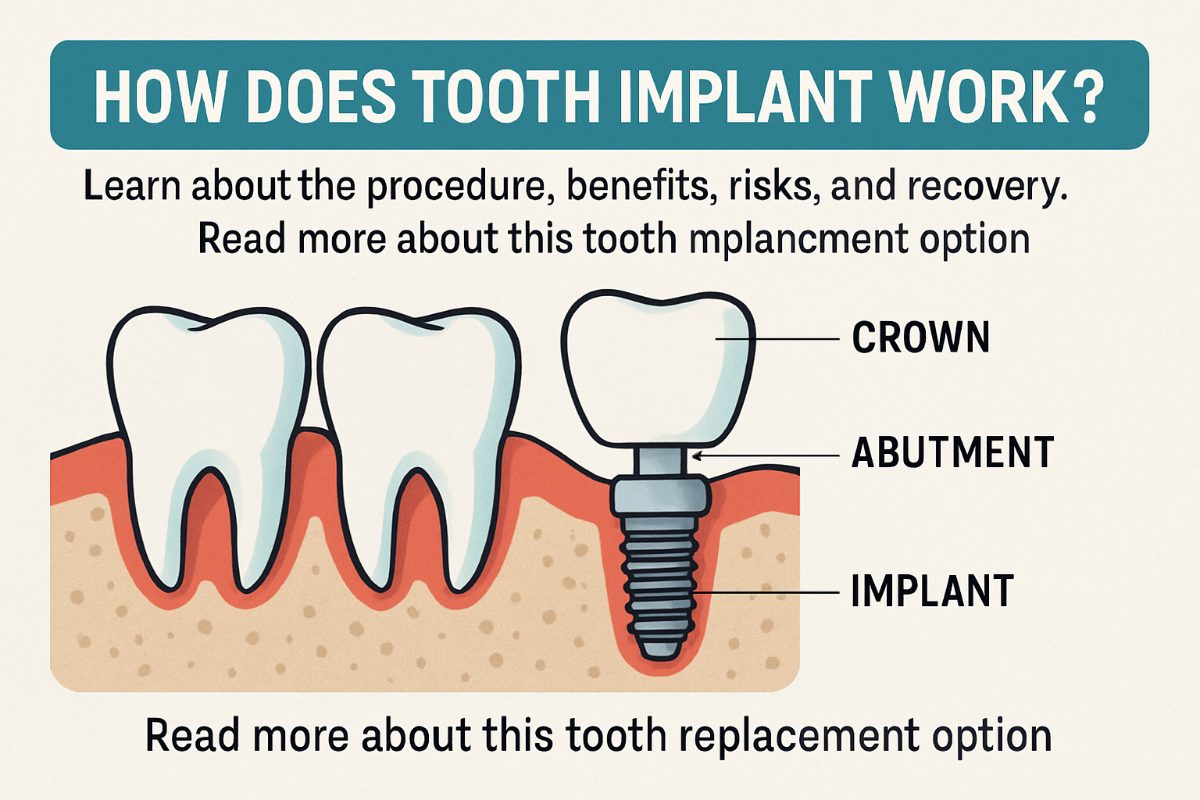
A tooth implant has three main parts:
- Implant (titanium root) — a screw placed into the jawbone that acts like a natural tooth root.
- Abutment — a connector that attaches the implant to the visible tooth replacement.
- Crown — the tooth-shaped cap that looks and functions like a real tooth. Crowns are often ceramic for a natural look.
How Does Tooth Implant Work: Step-by-Step
Consultation and Planning
First, the dentist reviews your medical history, checks your mouth, and takes imaging like CBCT or digital x-rays. This maps bone and nerves and helps plan the exact implant position for the best outcome.
Surgical Placement of the Implant
Placing the implant is a minor surgery. Local anesthetic or sedation keeps you comfortable. The implant is inserted into the bone, often using a surgical guide made from your scans to ensure precise placement.
Osseointegration — Healing and Integration
Over weeks to months, your bone grows around the implant in a process called osseointegration. This fusion creates the strong foundation needed for chewing. Typical healing takes 3–6 months; signs of success include steady comfort and no mobility at the implant site.
Abutment and Final Restoration
After healing, the abutment is attached and the final crown, bridge, or denture is placed. Many practices use CAD/CAM or in-house milling to make restorations that fit precisely and look natural.
Who Is a Good Candidate?
Good candidates have healthy gums and enough jawbone to support an implant. Chronic conditions like uncontrolled diabetes or heavy smoking can raise risks. If bone is thin, bone grafts or a sinus lift can prepare the site for implants.
What to Expect During Recovery
Expect mild pain and swelling for a few days after surgery. Eat soft foods, follow medications, and keep the area clean. Most people return to normal activities in a few days, with follow-up visits to check healing and progress.
Benefits vs. Risks
- Benefits: stable chewing, long lifespan, natural appearance, bone preservation.
- Risks/Complications: infection, implant failure, nerve irritation, and rare sinus issues. Most risks are low with proper planning and care.
Technology That Improves Implant Outcomes
Modern tools improve predictability: CBCT 3D scans for planning, CAD/CAM for precise crowns, in-house milling and 3D printing for fast, accurate guides and restorations. These reduce surprises and speed treatment.
About Dr. Joe Lee and Lalor Implant Center
Dr. Joe Lee, DDS, MDS, FACP, is a board-certified prosthodontist leading Lalor Implant Center. The team uses evidence-based protocols and a digital workflow to deliver precise, esthetic results while focusing on patient comfort.
How to Learn More or Schedule a Consultation
If you still ask, “how does tooth implant work in Vestal, NY?” schedule a consultation. We use CBCT imaging and digital planning to show you exactly how implants would work for your mouth and provide a personalized treatment plan. Contact Lalor Implant Center to book your visit.