Losing a tooth affects more than your smile. Timely replacement helps preserve chewing, speech, jawbone, and the look of your face. When replacing a lost tooth, goals are to restore function, prevent neighboring teeth from shifting, and protect bone. Below is a clear guide to the main choices, how they affect your oral health, who makes a good candidate, what a dental implant involves, and brief notes on cost and next steps.
Common options for replacing a lost tooth
Dental implants
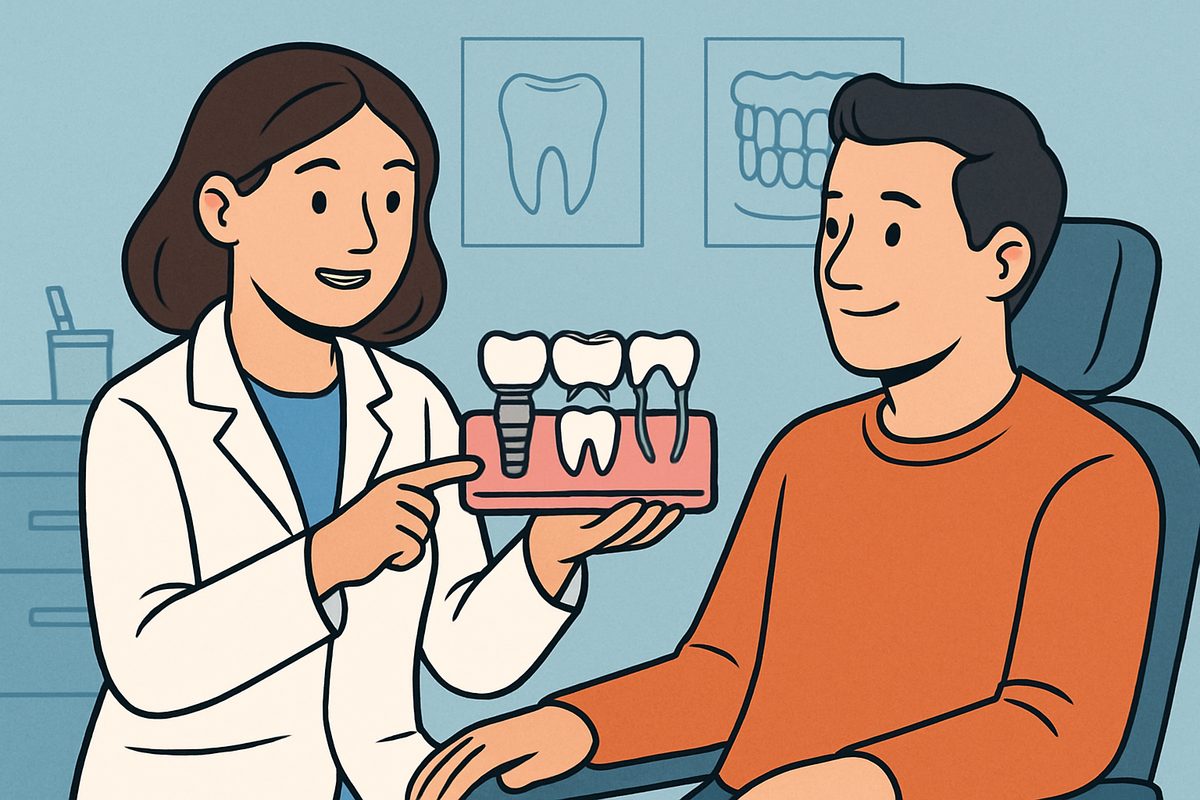
A dental implant is a titanium post placed into the jaw to act like a root, topped with a custom tooth crown. For many patients, especially when replacing missing teeth in Vestal, NY, dental implants are the preferred long-term option because they restore chewing force and help preserve bone. Dental implants require surgery and healing time but often last decades with good care.
Fixed dental bridge
A dental bridge replaces a missing tooth by attaching a tooth crown to the adjacent teeth. This option works well if neighboring teeth already need tooth crowns. Pros: no surgery and faster treatment. Cons: the healthy adjacent teeth must be trimmed, and the dental bridge does not stop bone loss under the missing tooth. A fixed dental bridge can be a solid choice when replacing missing teeth in Vestal, NY, for patients who prefer a non-surgical approach.
Removable partial denture
A partial denture is a removable device that clips onto remaining teeth. It’s often the most budget-friendly choice and can be used short- or long-term. Maintenance includes daily cleaning and occasional adjustment. Dentures are less stable than dental implants and do not prevent bone loss where the tooth is missing.
Resin-bonded (Maryland) dental bridge
A Maryland dental bridge uses metal or ceramic wings bonded to the back of adjacent teeth. It’s conservative because little tooth structure is removed. It’s best for front teeth and low-bite-force situations. Limitations include lower long-term strength and a higher chance of debonding.
How each option affects oral health
Bone health and preservation
Only dental implants replace the root and stimulate the jawbone, which helps prevent bone shrinkage. Dental bridges and dentures sit on the gum and do not stop bone loss at the missing site.
Adjacent teeth and bite
Dental bridges load neighboring teeth and require altering them. Dentures distribute force across gums and teeth and can change your bite over time. Dental implants preserve neighboring tooth structure.
Longevity and maintenance
Dental implants can last many years with brushing, flossing, and dental checkups. Dental bridges may need replacement every 7–15 years. Partials often need adjustments and may wear faster.
Who is a good candidate when replacing a lost tooth
Good candidates are in generally good health, have controlled gum disease, and sufficient bone volume. Smoking, uncontrolled diabetes, or poor oral hygiene raise risks. Older age alone isn’t a barrier. Some patients need bone grafts or sinus lifts before dental implant placement.
What to expect if you choose a dental implant
Consultation and imaging
Surgery, healing, and restoration
Typical timeline: placement of the dental implant, several months for osseointegration (bone fusing to the dental implant), then an abutment and final tooth crown. Recovery is usually manageable with short-term swelling and discomfort.
Costs, insurance, and financing options for replacing missing teeth
Dental implants are typically more expensive upfront than dental bridges or dentures but may be more cost-effective long term. Dental insurance may cover part of dental bridges or dentures; dental implants are sometimes partially covered. Many practices offer financing, payment plans, or third-party loans.
How to choose the right option for you
Consider long-term goals, budget, desire to preserve bone, tolerance for surgery, and preference for fixed versus removable solutions. For complex or highly esthetic cases, consult a prosthodontist.
About Dr. Joe Lee and Lalor Implant Center
Dr. Joe Lee, DDS, MDS, FACP, is a board-certified prosthodontist and Diplomate of the American Board of Prosthodontics. Lalor Implant Center in Vestal, NY uses CBCT imaging, CAD/CAM design, milling, and 3D printing to plan and deliver dental implant restorations with precision and esthetic control.
Schedule a consult to discuss replacing a lost tooth
Contact us at our facility to get a personalized plan for replacing teeth in Vestal, NY. Bring your medical history, list of medications, and any prior dental records or x-rays. A consult will review options, timelines, and costs so you can choose the best path for your health and smile.