
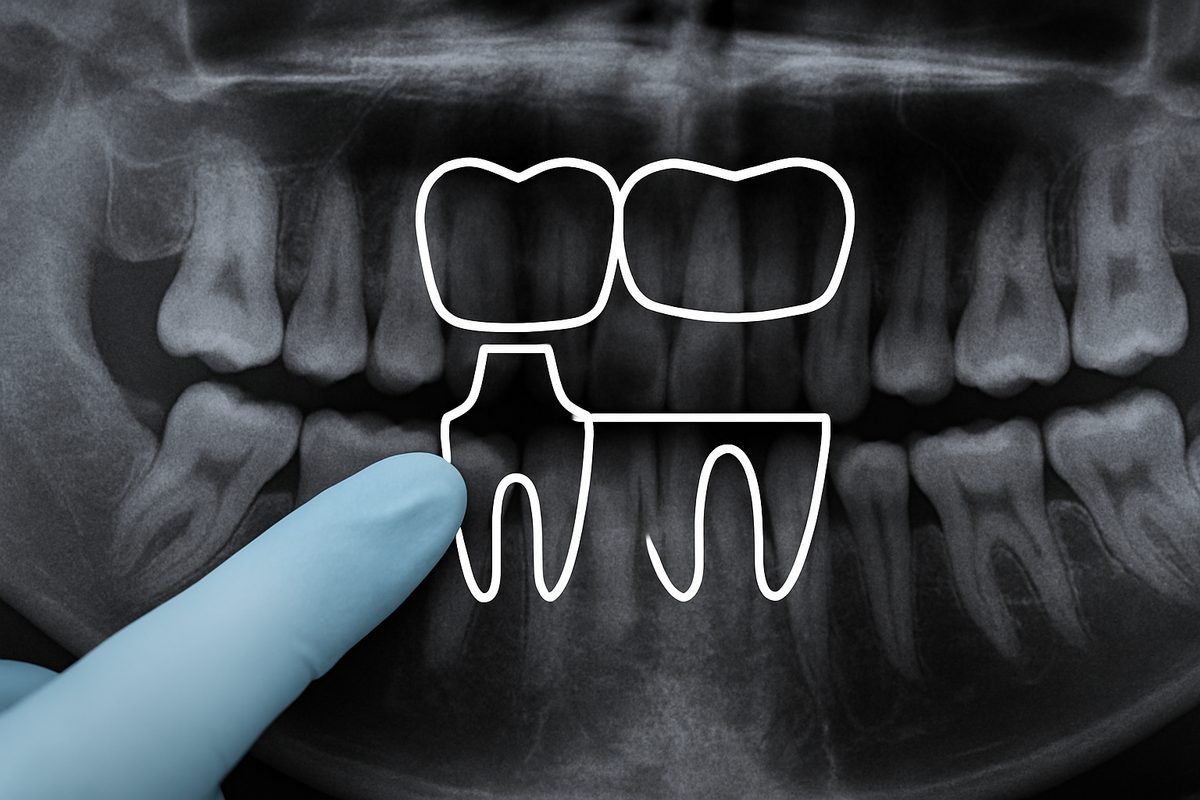
An abutment tooth is a natural tooth used to support a dental bridge or other prosthetic. If you’re asking about implants, it’s important to know what an abutment tooth does and when it’s a good option. Understanding this term helps you weigh the pros and cons of using a nearby tooth versus placing an implant for a missing tooth.
What Is an Abutment Tooth?
An abutment tooth is a real tooth that’s prepared and crowned to hold a bridge or partial denture. Related but different is an implant abutment — the metal or ceramic connector attached to a dental implant. Both serve as support points for restorations, but one is a natural tooth, and the other connects directly to an implant fixture.
Abutment Tooth vs. Implant Abutment: Key Differences
Natural abutment tooth for bridges
A healthy tooth can be shaped and capped to support a bridge. That tooth must be strong and free of major decay or gum disease. Preparing a tooth can weaken it or expose it to future problems, so choosing a natural abutment carries some risk to that tooth’s long-term health.
Implant abutment for implants
An implant abutment screws into an implant placed in the jawbone. Because the implant stands on its own, it doesn’t rely on neighboring teeth for support. This avoids stressing healthy adjacent teeth and can be a better long-term solution when nearby teeth are not ideal abutments.
How an Abutment Tooth Affects Implant Treatment Planning
The health of nearby teeth, bone height, and gum condition all shape the plan. If the nearby teeth are strong, a bridge supported by an abutment tooth may be simple. If teeth are compromised, an implant may be a safer option. CBCT 3D imaging and digital planning help clinicians evaluate bone, roots, and tissues to determine whether an abutment tooth is suitable.
Common Problems with Abutment Teeth and Typical Solutions
Abutment teeth can suffer decay, fractures, root canal needs, or advanced gum disease. Solutions range from repairing and crowning the tooth to performing a root canal to extracting and replacing it with an implant. In some cases, alternative designs, such as cantilever bridges or removable partial dentures, are used to protect nearby teeth.
What to Expect When an Abutment Tooth Is Part of Your Restoration
Expect an exam and imaging, then preparation of the abutment tooth or placement of an implant. Your dentist will take impressions or digital scans, provide a temporary restoration, and later deliver the final crown or bridge. Follow-up visits check fit, bite, and oral hygiene to protect the abutment tooth and surrounding tissues.
Questions to Ask About Your Abutment Tooth and Implant Options
Ask: Is this tooth healthy enough to be an abutment? What risks exist if we use it? Would an implant be a better long-term choice? What materials will be used, and is there a warranty? How will you protect the health of adjacent teeth and gum tissue?
How Lalor Implant Center and Dr. Joe Lee Approach Abutment Teeth and Implant Restorations
At Lalor Implant Center, Dr. Joe Lee (DDS, MDS, FACP) evaluates abutment tooth options using CBCT, CAD/CAM, and a full digital workflow. As a board-certified prosthodontist, he combines 3D imaging and in-house milling/3D printing to plan precise, evidence-based restorations that aim to protect natural teeth and deliver lasting results.
Next Steps: Scheduling an Evaluation
To evaluate your abutment tooth or implant options, schedule an exam and bring any recent X-rays or records. A thorough review of your teeth, gums, and 3D images will clarify whether an abutment tooth or an implant is the best long-term choice for your smile.