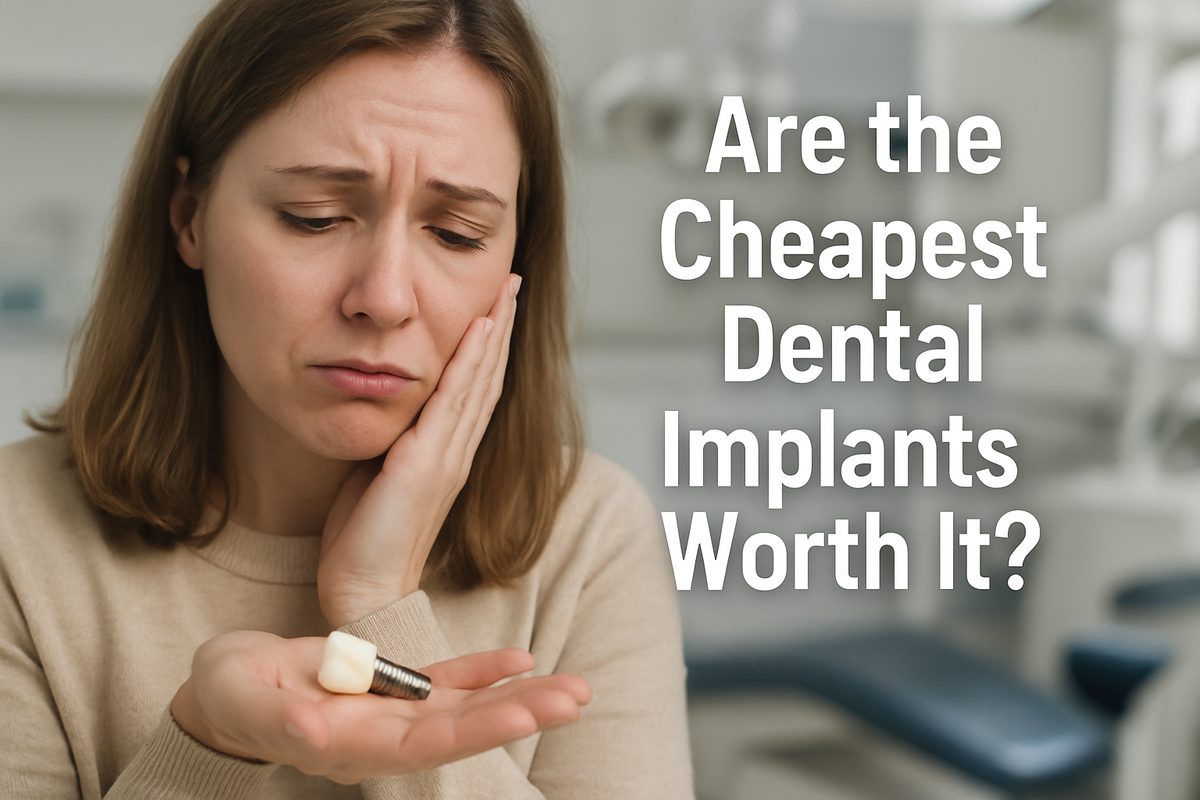
Are the lowest-cost options for tooth replacement really a bargain, or will they cost you more later? This post looks at what people mean by the term “cheapest dental implants,” how clinics cut corners, the short- and long-term risks, when a lower price might be reasonable, and clear questions to ask before you commit. Read on for practical steps to compare price versus value.
What people mean by “cheapest dental implants”
Many shoppers mean low advertised prices or discounts from budget clinics. That can include discount chains, traveling or overseas clinics, cut-rate lab work, and offers that strip out diagnostics or follow-up care. The listing price often covers only the implant post and a basic crown, not the extras needed for a stable, long-lasting result.
How clinics cut costs
– Cheaper materials and unknown implant brands
– Fewer or no 3D scans and diagnostic tests
– Less experienced or undertrained providers doing key steps
– Minimal or no post-op follow-up care
– Outsourced or low-quality lab work for restorations
Common short-term and long-term risks of cheapest dental implants
Skimped planning or poor surgical technique raises the risk of infection and implant failure. In the short term, this can mean pain, swelling, and extra visits. Long-term, you may face loose or failed implants, bone loss, or restorations that don’t fit or look right. Poor bite alignment and aesthetic problems often require costly rework.
Hidden downstream costs are common: bone grafts, repeat surgery, new crowns or bridges, and lost time from work. The low upfront price can turn into a much higher total cost.
When a lower-cost implant might be acceptable
A lower price can be reasonable for a single, straightforward implant if the clinic still performs full diagnostics, uses reputable materials, and provides clear guarantees. If CBCT imaging, a written treatment plan, and a warranty are included, risk is lower.
Red flags even for low-cost offers include no 3D imaging, vague pricing, no documented treatment plan, no warranty, or the provider refusing to show similar before/after cases and references.
How to compare price vs. value for implants
Compare provider credentials, whether CBCT imaging and digital planning are used, and if CAD/CAM workflows and quality lab standards are applied. Ask what implant brand and materials are used, and whether follow-up care and warranties are included. Investing more up front often prevents complications, repeated procedures, and greater lifetime cost.
Essential questions to ask before choosing the cheapest dental implants
– Do you use CBCT imaging for planning?
– Who will place and restore the implant, and what are their credentials?
– What implant brand and materials are used?
– Is warranty or follow-up care included, and what are out-of-pocket risks?
– Can I see before/after photos and patient reviews for similar cases?
Why a board-certified prosthodontist matters for implant outcomes
Board-certified prosthodontists have advanced training in complex restorations and implant planning. That expertise reduces risk, improves function and esthetics, and helps avoid costly mistakes. Complex cases especially benefit from their restorative viewpoint and surgical-restorative coordination.
Why consider Lalor Implant Center and Dr. Joe Lee
Dr. Joe Lee is a board-certified prosthodontist with advanced implant and esthetic credentials. Lalor Implant Center in Vestal, NY uses CBCT imaging, CAD/CAM, in-house milling, and 3D printing with a full digital workflow. These technologies, combined with patient-centered planning and warranties, protect long-term value over simply choosing the cheapest option.
Next steps and simple checklist
Gather written quotes, compare diagnostics and materials, ask the essential questions above, and review before/after photos and patient reviews. Book a consultation to get a personalized plan and clear long-term cost estimate. If you want help reviewing options, schedule a consult to discuss what’s right and durable for your smile.