If you’re researching dental implants in the USA, this guide explains what they are, how the procedure works, what they typically cost, how safe they are, and the next steps. You’ll learn the parts of an implant, what to expect at the consult and surgery, the main cost drivers, ways to pay, and why a board-certified prosthodontist can matter for complex cases.
What Are Dental Implants?
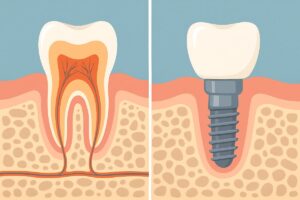
Dental implants are artificial tooth roots made of titanium that sit in the jawbone to support replacement teeth. The three main parts are the implant (the root), the abutment (connector), and the crown (the visible tooth). Implants can replace a single tooth, several teeth with bridges, or an entire arch with full-arch restorations like All-on-4.
How The Dental Implant Procedure Works
Consultation and Planning
At your consultation, the dentist reviews your health, dental history, and meds. Imaging like CBCT (3D cone beam) and digital scans are common for precise planning. These tools let providers map nerves, assess bone density, and plan the ideal implant position before surgery. Good planning reduces surprises during treatment.
Surgery and Healing
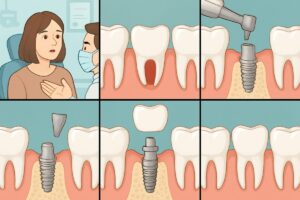
During surgery, the implant is placed into the jawbone under local anesthesia. In many cases, a surgical guide generated from digital planning is used to ensure accuracy. After placement, the bone needs time to fuse to the implant—a process called osseointegration—which usually takes 3–6 months. Once healed, the abutment and final crown or prosthesis are attached.
Typical Costs Of Dental Implants In The USA
Costs for dental implants in usa vary widely. A single implant with a crown typically costs a few thousand dollars. Replacing multiple teeth or a full arch is more costly. Additional procedures, such as bone grafts or sinus lifts, increase the price. The type of crown (porcelain, zirconia), and whether the dentist does surgery and restoration in-house or refers out, also affects fees. Regional differences and provider experience play a big role.
What Affects Success And Safety
Success depends on patient health (diabetes control, smoking status), bone quality, and oral hygiene. Provider skill and experience matter: precise placement and proper restoration reduce complications. Advanced tech—CBCT imaging, guided surgery, and digital workflows—helps improve safety and predictability by reducing human error and improving fit.
How To Pay For Dental Implants
Dental insurance often limits implant coverage, so check your plan. Many patients use financing plans, medical credit cards, or in-house payment plans. Flexible Spending Accounts (FSA) or Health Savings Accounts (HSA) can help. Some practices offer tiered pricing or financing partners to spread payments over time.
Why Choose A Board-Certified Prosthodontist
For complex restorations and esthetic outcomes, a board-certified prosthodontist brings advanced training in implants, crowns, and full-mouth rehabilitation. For example, Lalor Implant Center and Dr. Joe Lee combine board certification with technologies like CBCT, CAD/CAM design, in-house milling, and 3D printing to improve precision and speed while maintaining strong esthetic results.
Next Steps If You’re Considering Dental Implants
Schedule a consultation with a trusted implant specialist, and bring medical and dental records. Ask about the provider’s experience, success rates, use of CBCT and guided surgery, timeline, and a full cost estimate including any grafting. If you’re ready, contact a local implant office to schedule an exam and receive a personalized plan.