People often ask whether “dental implants” and “tooth implants” mean the same thing. In most everyday use they’re interchangeable, but there’s a subtle difference: dental implants tooth implants can refer either to the complete dental implant system (the metal post, connector, and tooth crown) or simply the replaced tooth itself. This guide clears up that confusion and helps you pick the right option for your smile.
What people mean by dental implants tooth implants
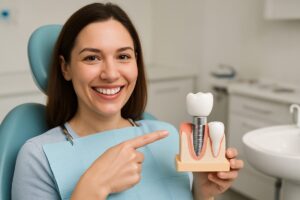
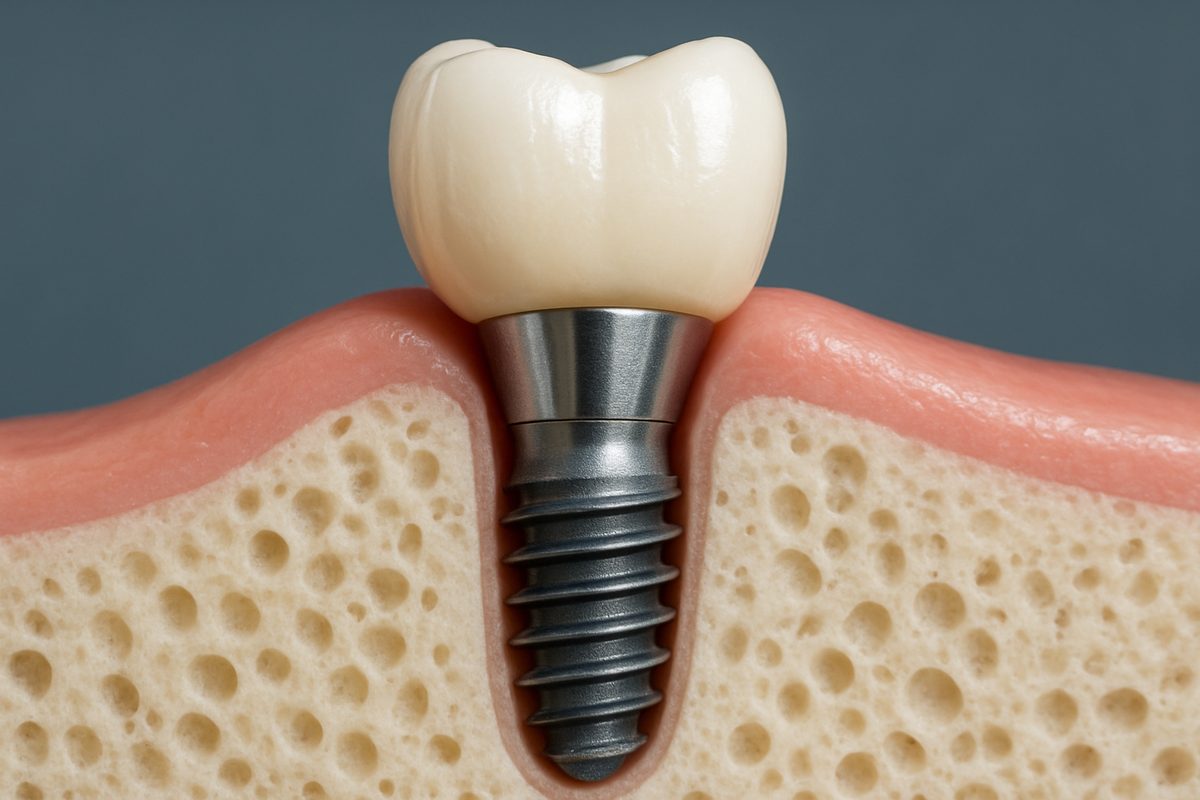
Many people use the terms interchangeably. Clinically, “dental implant” usually describes the full replacement system: the fixture in the bone, the abutment, and the tooth crown or prosthesis. “Tooth implant” often refers to a single replaced tooth — the visible tooth crown — or the single-tooth solution. Knowing the difference helps when discussing treatment and cost.
Basic parts of a dental implant system
Dental implant fixture (the titanium post)
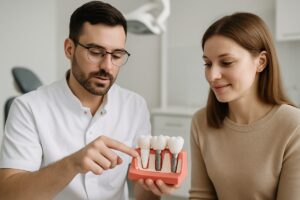
This is the screw-like post placed in the jawbone. Made of titanium or similar materials, it fuses with bone in a process called osseointegration. That fusion gives dental implants the stability needed to bite and chew like a natural tooth.
Abutment
The abutment is the connector between the dental implant and the tooth crown. It can be stock or custom-made and attaches to the dental implant after healing, providing a secure base for the final restoration.
Tooth crown or prosthetic tooth
The tooth crown is the visible part of the tooth, made from porcelain, zirconia, or metal-ceramic. Tooth crowns are shaped and colored to match nearby teeth for a natural look.
Types of dental implant treatments
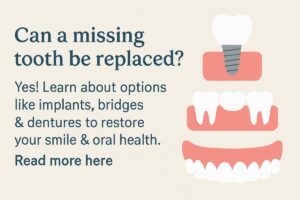
Single-tooth implants replace one missing tooth. Implant-supported bridges replace several teeth in a row using fewer dental implants. All-on-4 or full-arch solutions use four or more dental implants to support an entire set of upper or lower teeth — a faster, often more affordable option for full-mouth replacement.
How the treatment process works (simple timeline)
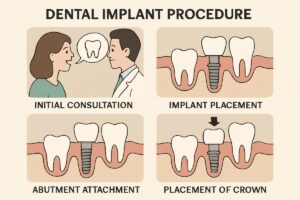
Consultation and imaging: Exam, X-rays, and 3D scans guide planning. Dental implant placement surgery: The post is placed into bone, usually with local anesthesia. Healing and integration: Bone bonds to the dental implant over weeks to months. Final tooth crown or prosthesis placement: After integration, the abutment and final restoration are attached.
Who is a good candidate?
Good candidates are healthy adults with adequate jawbone or those willing to have bone grafting. Nonsmokers and patients with good oral hygiene see higher success rates. Certain medical conditions (uncontrolled diabetes, some immune disorders) or heavy smoking can affect healing and candidacy.
Benefits and drawbacks
Benefits
Dental implants restore chewing function, help preserve jawbone, can last decades with care, and look natural when well-designed.
Drawbacks
They cost more upfront, take time (healing and appointments), may need bone grafts or sinus lifts, and carry normal surgical risks like infection or implant failure.
Cost, maintenance, and lifespan
Costs vary by number of dental implants, need for grafting, and materials. Home care is like natural teeth: brush, floss, and use interdental brushes as recommended. Regular dental visits for cleaning and checkups help dental implants last a lifetime for many patients.
Common myths and quick FAQs
Q: Are they painful? A: Most patients report mild discomfort managed with medications; the procedure is done with anesthesia. Q: Do dental implants look fake? A: No — well-made tooth crowns match adjacent teeth in shape and color. Q: Does insurance or Medicare cover them? A: Dental plans sometimes cover parts of treatment; Medicare typically does not cover routine dental implants.
Why choose a board-certified prosthodontist for complex cases
Board-certified prosthodontists have advanced training in replacing teeth and restoring function and appearance. For complex full-mouth reconstructions or esthetic cases, their experience improves planning, predictable outcomes, and long-term success.
About Dr. Joe Lee and Lalor Implant Center
Dr. Joe Lee, DDS, MDS, FACP, is a board-certified prosthodontist and expert in dental implant and esthetic dentistry. Lalor Implant Center in Vestal, NY, uses CBCT imaging, CAD/CAM, 3D printing, and a digital workflow to plan and deliver precise implant care.
Schedule Your Dental Implant Consultation Today
If you’re deciding on dental implants tooth implants systems, schedule a consultation to review images and options. An exam and 3D scan will show the best path for your smile and health. Contact the office to set a time.