
Most dental implants are made of titanium, a strong, lightweight metal that bonds directly with jawbone and has decades of proven success. Zirconia, a metal-free ceramic, is an alternative for some patients. With proper planning and care, implants made from either material can last for many years, often a lifetime, while the crown on top may need replacing after normal wear.
When you’re considering dental implants, it’s natural to wonder what they’re made of and whether the material makes a difference. The short answer: it does. The material affects how well your implant bonds with bone, how strong it is, and how long it lasts. Here’s what you should know.
What Are Dental Implants Made Of?
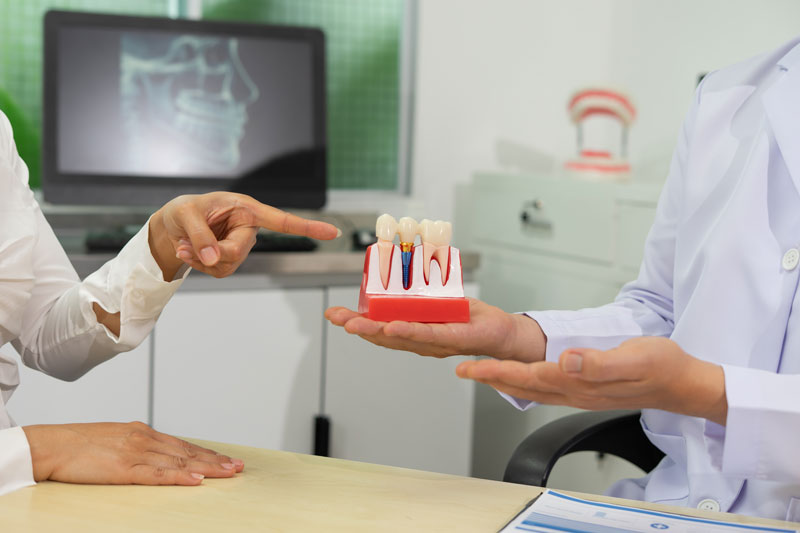
A dental implant has three parts, and each can be made from different materials:
- The implant post: The part placed in your jawbone, usually titanium or zirconia
- The abutment: The connector between the post and the crown, often titanium or zirconia
- The crown or prosthesis: The visible tooth, typically porcelain, zirconia, or a metal-ceramic combination
Why Is Titanium the Most Common Implant Material?
Titanium has been used in dental implants for decades, and it remains the standard for good reason:
- It bonds with bone. Titanium supports osseointegration, the process where bone grows directly onto the implant surface and locks it in place.
- It’s biocompatible. The body accepts titanium very well, and true titanium allergies are rare.
- It’s strong and lightweight. Titanium handles everyday chewing forces without being heavy.
- It resists corrosion. It holds up well in the moist environment of the mouth.
- It has a long track record. Titanium implants are backed by extensive research and long-term results.
Most implants use commercially pure titanium or a titanium alloy, which adds a small amount of other metals for extra strength.
What Are Zirconia Implants?
Zirconia is a tooth-colored ceramic used as a metal-free alternative to titanium. Some patients consider it if they:
- Prefer a metal-free option
- Have thin gums where a gray tint might show through
- Have a confirmed sensitivity to metals
Zirconia is strong and looks natural, but it has a shorter clinical history than titanium and is less flexible in design. Your implant team will help you decide whether it’s appropriate for your situation.
Which Implant Material Lasts Longest?
Both titanium and zirconia can provide long-lasting results. Titanium has the longest track record and is generally the first choice for most patients, including those receiving full-arch implants. The implant post itself can last for decades when it’s properly placed and cared for. The crown or prosthesis on top may need replacing after many years of normal use.
What Affects Dental Implant Longevity and Success?
The material is only part of the story. Long-term success also depends on:
- Careful planning: 3D CBCT imaging and digital planning help place implants in the best possible position.
- Bone quality and quantity: Healthy bone gives implants a strong foundation. Grafting may be needed if bone is thin.
- The restoration design: A well-designed crown or bridge spreads chewing forces evenly.
- Your health: Uncontrolled diabetes and smoking can slow healing and increase risk.
- Daily care: Brushing, cleaning between teeth, and regular checkups protect the gums and bone around your implant.
Learn more about how long dental implants last.
What About the Crown Material?
The visible part of your implant is just as important for appearance and durability:
- Porcelain and layered ceramics: Very natural-looking and ideal for front teeth
- Zirconia: Extremely strong and a popular choice for back teeth and full-arch restorations
- Metal-ceramic: Combines a metal base with a porcelain surface for strength
Explore your dental implant prosthesis options.
Why Does Your Provider Matter?
High-quality materials work best in experienced hands. At Lalor Implant Center, board-certified prosthodontist Dr. Joe Lee plans every implant with the final tooth in mind, using CBCT imaging, CAD/CAM design, and digital workflows for precise results. Learn why quality matters when choosing your implant provider.
Frequently Asked Questions
Can I be allergic to titanium implants? Titanium allergies are rare. If you have a known metal sensitivity, talk with your implant team about zirconia or testing.
Will a titanium implant set off metal detectors? It’s very unlikely. Dental implants are small and typically don’t trigger airport security scanners.
Are titanium implants safe for MRI scans? Titanium is non-magnetic and is generally considered safe for MRI. Always tell your medical team about any implants.
Is zirconia better than titanium? Neither is better for everyone. Titanium has the longest proven track record, while zirconia offers a metal-free option for certain patients.
Talk to a Prosthodontist in Vestal, NY
Have questions about which implant materials are right for you? Dr. Joe Lee and the Lalor Implant Center team are here to help. Visit us at 2521 Vestal Parkway West, Vestal, NY 13850, call (607) 214-2865, or contact us to schedule your consultation.